
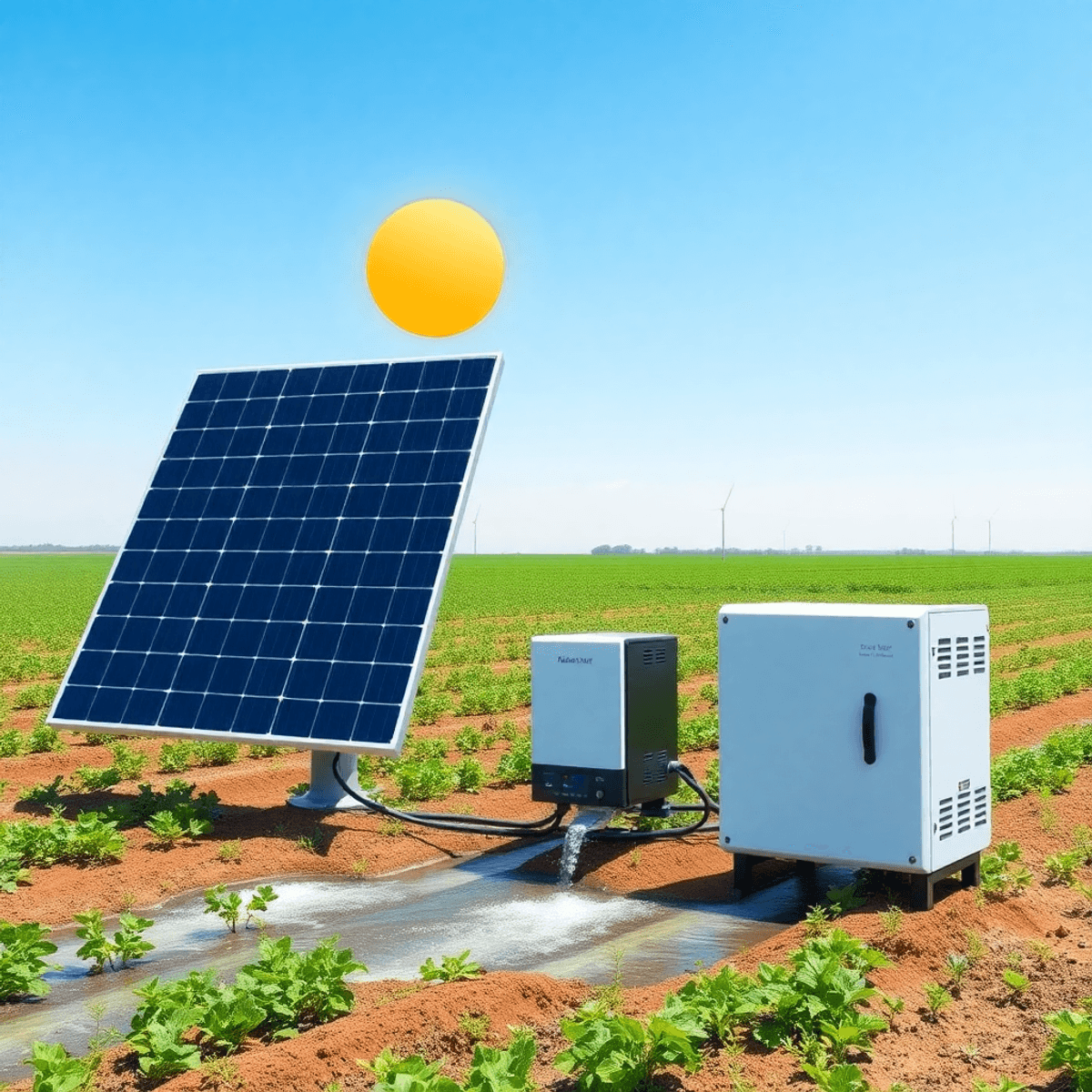
Membeli inverter pompa surya MPPT OEM pabrikan terdengar sederhana, sampai Anda benar-benar mencoba menentukan spesifikasinya.
Karena semua halaman produk terlihat sama. “MPPT.” “VFD.” “Efisiensi tinggi.” Lalu, begitu unitnya sampai di lokasi, unit itu langsung mati karena tegangan berlebih pada panel surya pada pukul 9 pagi. Atau, unitnya memang berjalan, tapi alirannya… agak mengecewakan.
Jadi, ini adalah panduan praktis yang ditulis dalam bahasa Inggris yang mudah dipahami. Apa sebenarnya fungsi inverter, bagaimana MPPT dan VFD dapat meningkatkan produksi air, cara menentukan ukuran yang tepat, pertanyaan apa saja yang perlu diajukan kepada pabrik, serta templat lembar data yang bisa Anda salin langsung ke dalam daftar produk dan isi sesuai dengan masing-masing model.
Apa Sebenarnya Fungsi Inverter Pompa Tenaga Surya MPPT Pabrikan (dan Mengapa Berbeda)
Sebuah Inverter pompa tenaga surya MPPT pada dasarnya adalah pengatur pompa yang dipasang di antara panel surya dan motor pompa Anda.
- Panel surya menghasilkan daya DC (tegangan dan arus yang berubah sepanjang hari).
- Motor pompa biasanya memerlukan Listrik AC (fase tunggal atau tiga fase), pada tegangan dan frekuensi yang terkendali.
- Inverter mengubah arus searah (DC) yang berfluktuasi itu menjadi arus bolak-balik frekuensi variabel (dan terkadang keluaran DC untuk jenis pompa tertentu), sambil terus-menerus menyesuaikan titik operasi PV dengan menggunakan MPPT.
Jadi, alih-alih “masukan PV, keluaran AC tetap” seperti inverter pada umumnya, inverter pompa lebih mirip dengan:
PV masuk → mengoptimalkan daya PV (MPPT) → mengatur kecepatan motor secara bertahap (perilaku VFD) → melindungi pompa → menjaga pompa tetap beroperasi dalam rentang waktu paparan sinar matahari yang lebih luas
Apa perbedaannya dengan inverter surya standar (inverter rumah terhubung jaringan atau hibrida)
Inverter surya biasa umumnya dirancang untuk:
- sinkronisasi jaringan
- menyediakan makanan untuk seluruh penghuni rumah
- ekspor listrik
- aturan anti-islanding
- tidak memperhatikan kondisi pompa yang beroperasi dalam keadaan kering
Inverter pompa dirancang untuk:
- logika pengendalian khusus pompa (perilaku awal, pengaturan kecepatan, tidur dan bangun)
- soft start untuk mengurangi guncangan mekanis dan arus lonjakan listrik
- perlindungan uji coba tanpa beban (tidak ada air, arus rendah, masukan sensor)
- penanganan kelebihan beban dan kehilangan daya dorong yang sesuai dengan perilaku pompa
- Kontrol serupa VFD (kecepatan variabel berdasarkan daya PV yang tersedia)
Anda tentu saja bisa mengoperasikan pompa menggunakan jenis inverter lain dalam beberapa konfigurasi, tetapi inverter khusus pompa cenderung lebih mudah digunakan dan lebih “dirancang khusus untuk tujuan ini”.
Perannya dalam sistem pompa tenaga surya
Diagram blok umum:
Panel surya → (penggabung/SPD—opsional) → inverter/pengontrol pompa MPPT → motor pompa
Fitur tambahan opsional, tergantung pada model dan proyek:
- sensor ketinggian air
- sakelar apung
- sensor tekanan
- pengaktifan dan penonaktifan jarak jauh
- kadang-kadang masukan jaringan/generator
- kadang-kadang masukan baterai (desain hibrida, bukan universal)
Contoh penggunaan yang umum
Kamu akan melihat hal-hal ini di:
- sistem irigasi (tetes, sprinkler, genangan)
- pompa sumur bor/pompa celup untuk lahan pertanian
- pasokan air untuk ternak
- sistem air mandiri untuk desa atau pondok terpencil
- pengaliran air banjir, sirkulasi kolam, pemindahan air
- sistem pasokan air jarak jauh yang pemeliharaannya harus mudah dilakukan
Jenis motor yang didukung (hal yang perlu diklarifikasi sejak awal)
Inverter pompa umumnya dijual dalam bentuk:
- keluaran satu fasa model (untuk pompa permukaan berukuran lebih kecil)
- keluaran tiga fasa model (untuk sebagian besar pompa sumur bor/pompa submersible dan motor berdaya besar)
Sebagian besar ditujukan untuk Motor induksi arus bolak-balik (motor asinkron), terutama yang tiga fasa. Beberapa sistem yang ada di pasaran adalah Pompa BLDC berdasarkan, tetapi perangkat tersebut sering kali menggunakan pasangan pengendali dan motor yang sudah disesuaikan. Jangan berasumsi bahwa BLDC kompatibel kecuali hal itu dinyatakan secara jelas dalam lembar spesifikasi.
Dasar-dasar MPPT + VFD: Bagaimana Sistem Ini Mengambil Lebih Banyak Air dari Panel Surya yang Sama
Orang-orang menganggap “MPPT” seperti sekadar label. Dalam hal pemompaan, hal ini benar-benar penting.
MPPT dalam bahasa yang mudah dipahami
Panel surya tidak memiliki tegangan tetap. Panel surya memiliki titik optimal di mana panel tersebut menghasilkan daya terbesar pada saat itu. Titik tersebut terus berubah tergantung pada:
- intensitas sinar matahari (irradiance)
- suhu panel
- awan tipis dan berawan sebagian
- waktu dalam sehari
MPPT (Pelacakan Titik Daya Maksimum) Apakah inverter secara aktif menyesuaikan tegangan/arus operasi PV agar susunan panel tetap berada di dekat titik optimal tersebut?.
Untuk pompa, hal ini penting karena tanpa kinerja MPPT yang baik:
- pagi hari dan sore hari menjelang malam terasa seperti “hampir dimulai, tapi belum sepenuhnya”
- Kondisi awan sebagian dapat menyebabkan getaran, mesin mati mendadak, atau mesin sering menyala kembali
- jam pompa yang dapat dimanfaatkan berkurang
Perilaku VFD (mengapa inverter pompa terasa berbeda)
Inverter pompa berperilaku seperti sebuah VFD (Penggerak Frekuensi Variabel):
- itu mengendalikan frekuensi keluaran (Hz) dan tegangan keluaran untuk mengontrol kecepatan motor
- Tenaganya meningkat secara bertahap, bukan langsung melesat dengan tenaga penuh seketika
Manfaat:
- soft start mengurangi arus masuk dan mengurangi beban pada pipa dan sambungan
- arus lonjakan yang lebih rendah artinya PV Anda tidak akan turun terlalu drastis saat dinyalakan
- kecocokan yang lebih baik: kecepatan motor dapat disesuaikan dengan daya surya yang tersedia, alih-alih terus-menerus menyala dan mati
MPPT + VFD secara bersamaan = rentang operasi yang lebih luas
Saat intensitas sinar matahari rendah, MPPT memaksimalkan output panel surya, dan VFD dapat mengoperasikan pompa pada kecepatan yang lebih rendah daripada menghentikannya sama sekali.
Dampak bersihnya, di banyak lokasi nyata:
- jumlah kios yang lebih sedikit
- jumlah siklus berhenti/mulai yang lebih sedikit
- proses pemompaan yang lebih stabil
- lebih banyak air per hari dari susunan panel surya yang sama, terutama pada jam-jam peralihan
Desain frekuensi tinggi vs frekuensi rendah (tingkat umum)
Anda akan mendengar pihak pabrik menyebut model-model tersebut sebagai “frekuensi tinggi” atau “frekuensi rendah”.
- Frekuensi tinggi Desain sakelar umumnya berukuran lebih kecil, lebih ringan, dan sering kali lebih efisien, namun bisa jadi lebih rentan terhadap kondisi yang ekstrem, tergantung pada kualitas pembuatannya.
- Frekuensi rendah Desain-desain tersebut biasanya lebih besar dan lebih berat, terkadang lebih tahan terhadap beban berlebih dan kondisi awal yang berat, namun ukurannya lebih besar dan bobotnya lebih berat.
Tak perlu terlalu dipikirkan tanpa lembar spesifikasi dan detail aplikasi yang sebenarnya. Namun, hal itu memang memengaruhi ukuran, tingkat kebisingan, dan terkadang seberapa besar toleransi unit tersebut.
Istilah-istilah penting yang akan Anda temui dalam lembar data
Perhatikan hal-hal ini, karena kita akan menggunakannya nanti dalam templat lembar data:
- Rentang tegangan MPPT
- Tegangan masukan PV maksimum
- Tegangan sirkuit terbuka (Voc)
- Rentang frekuensi keluaran (misalnya 0 hingga 50/60 Hz, terkadang hingga 300 Hz tergantung pada jenis pompa)
- Efisiensi (efisiensi puncak inverter, efisiensi MPPT)
- Arus masukan PV maksimum (dan per string saat ini, jika ditentukan)
Topologi Sistem: Pompa DC vs Pompa AC vs Hibrida (Baterai + PV)
Tidak ada satu pun topologi yang “terbaik”. Yang lebih penting adalah seberapa besar beban yang dapat ditanggung oleh jaringan Anda.
Sistem pompa DC
Pompa tenaga surya DC biasanya:
- PV → Pengatur pompa DC → Pompa DC (atau sistem terintegrasi)
Kelebihan:
- pemasangan kabel yang lebih sederhana pada beberapa kit
- sering kali dioptimalkan sebagai paket terpadu
Kekurangan:
- pilihan pompa yang lebih sedikit di banyak pasar
- Panjang kabel pada arus searah (DC) bisa menjadi masalah jika tegangannya rendah (kerugian akumulatif)
- Mencari penggantinya bisa jadi lebih sulit jika Anda membutuhkan model pompa tertentu
Pompa DC bisa menjadi pilihan yang sangat baik untuk sistem kecil dan solusi terpadu. Untuk sumur bor berdiameter lebih besar dan model pompa yang mudah didapat, pompa AC lebih banyak digunakan.
Pemompaan AC dengan inverter VFD MPPT
Inilah yang klasik:
- PV → Inverter pompa MPPT → Pompa 3 fasa
Kelebihan:
- ketersediaan pompa standar (terutama pompa submersible tiga fasa)
- lebih cocok untuk motor yang lebih besar
- Jalur kabel yang lebih panjang biasanya lebih mudah dikelola, terutama jika dirancang dengan benar
Kekurangan:
- memerlukan pengaturan parameter dan sistem perlindungan motor yang tepat
- hal-hal lain yang perlu dikonfirmasi: fasa, tegangan, batas frekuensi, jenis kabel, dan pengardean
Pompa hibrida (baterai + PV)
Beberapa model inverter pompa bersifat hibrida, yang berarti dapat digunakan dengan:
- Masukan PV, ditambah
- masukan baterai, atau masukan dari jaringan listrik/generator
Keunggulan penyimpanan:
- pompa pada malam hari (jika kapasitas baterainya mencukupi)
- menghaluskan aliran jika Anda membutuhkan tekanan yang stabil dan kondisi di lokasi tersebut keruh
- mencegah mesin menyala berulang kali jika dikonfigurasi dengan benar
Hal-hal yang tidak bisa dilakukan oleh penyimpanan secara ajaib:
- memperbaiki susunan panel surya yang ukurannya terlalu kecil
- menghilangkan kebutuhan untuk menentukan ukuran inverter yang tepat
- membuat pompa berdaya 2 kW beroperasi sepanjang malam dengan baterai litium berkapasitas kecil tanpa mengorbankan kapasitas baterai tersebut
Pilihan baterai yang akan Anda temui:
- asam timbal (murah, berat, masa pakai siklus lebih pendek)
- baterai litium (berbagai jenis komposisi kimia)
- Baterai LiFePO4 (terkenal karena masa pakai dan stabilitasnya)
Jika Anda menginginkan integrasi baterai, pastikan terlebih dahulu apakah inverter pompa tersebut memang dirancang untuk itu. Banyak “inverter pompa MPPT” yang hanya dilengkapi fitur MPPT untuk sistem pompa tenaga surya, bukan pengisi daya baterai tenaga surya dengan fitur lengkap.
Sistem pompa terhubung jaringan vs sistem pompa lepas jaringan
Sebagian besar inverter pompa digunakan secara off-grid karena tujuannya memang untuk pengadaan air di daerah terpencil. Namun, penggunaan bantuan jaringan listrik bisa menjadi pilihan yang tepat jika:
- Anda memerlukan layanan pemompaan yang terjamin, apa pun kondisinya
- Anda ingin menggunakan PV terlebih dahulu dan jaringan listrik sebagai cadangan
- Situs Anda memiliki jaringan listrik, namun tarif membuat pemompaan tenaga surya pada siang hari menjadi pilihan yang menarik
Jika diperlukan masukan dari jaringan listrik/generator, pastikan fitur tersebut benar-benar didukung, bukan sekadar “opsional” seperti yang tercantum dalam teks pemasaran.
Memilih Inverter Pompa Tenaga Surya MPPT yang Tepat: Daftar Periksa Penentuan Ukuran yang Praktis
Jika Anda melewatkan bagian ini, kemungkinan besar nanti Anda akan terlibat dalam percakapan yang berisi kode kesalahan.
1) Mulailah dari pompa (selalu)
Peroleh rincian pada pelat nama pompa:
- jenis pompa: permukaan / submersible / sumur bor
- daya terukur (kW atau HP)
- tegangan nominal
- fase: satu fase atau tiga fase
- arus pengenal
- frekuensi nominal (50/60 Hz)
- debit target dan aliran (kebutuhan air Anda)
Inverter harus sesuai dengan kebutuhan listrik motor, bukan sekadar “kW”.
2) Memastikan ukuran susunan panel surya dan keamanan tegangan terbuka (Voc)
Penentuan ukuran sistem PV tidak semata-mata berarti “semakin banyak panel, semakin baik”.
Anda harus memastikan Cuaca dingin Voc tidak melebihi kapasitas inverter tegangan masukan PV maksimum.
Langkah-langkah:
- cari panel Voc di STC pada label modul
- Perkirakan nilai Voc pada kondisi terburuk (atau gunakan faktor koreksi suhu dari lembar data modul)
- kalikan dengan jumlah panel yang disusun secara seri
- pastikan tegangannya tetap di bawah tegangan masukan PV maksimum inverter dengan margin yang cukup
Di sinilah perbedaan antara model tegangan tinggi dan model tegangan rendah menjadi sangat penting.
3) Tiga fasa vs satu fasa
Jika Anda memiliki pompa sumur bor dengan ukuran yang cukup besar, sistem tiga fasa sering kali menjadi pilihan yang paling praktis:
- torsi yang lebih halus
- efisiensi yang secara umum lebih baik
- lebih banyak pilihan pompa di berbagai wilayah
- lebih cocok untuk penggunaan jangka panjang dan aplikasi dengan tekanan hidrostatik yang lebih tinggi
Inverter pompa fase tunggal memang ada dan berguna, namun pastikan untuk memilihnya dengan cermat.
4) Jarak kabel dan kebutuhan sensor
- Jarak yang jauh antara panel surya (PV) dan inverter, serta antara inverter dan pompa, menimbulkan masalah penurunan tegangan, kebisingan, dan pertimbangan terkait perlindungan.
- Siapkan sensor ketinggian air, sakelar apung, probe operasi kering, atau sensor tekanan jika otomatisasi menjadi pertimbangan.
- Jika Anda memerlukan pemantauan jarak jauh, pastikan tersedia antarmuka RS485 atau yang serupa, dan tanyakan protokol apa yang digunakannya.
5) Kendala lingkungan
Tanyakan di mana ia akan ditempatkan:
- ruang pompa yang panas, sinar matahari langsung, lahan pertanian yang berdebu
- lokasi pesisir yang lembap
- risiko banjir sesekali
Periksa:
- rentang suhu pengoperasian
- metode pendinginan (kipas, heatsink)
- kandang dan Peringkat IP
- kemudahan perawatan (kipas, filter, terminal)
Lokasi terpencil akan memperparah kelemahan pada penutup dan desain termal yang buruk.
Hal-hal yang Perlu Dipertimbangkan Terkait Pabrikan OEM: Pertanyaan yang Harus Diajukan kepada Pabrikan Sebelum Membeli
“OEM Pabrik” biasanya berarti unit tersebut dapat dijual dengan merek Anda sendiri, terkadang dengan tingkat penyesuaian yang lebih mendalam.
Perangkat OEM vs perangkat bermerek
Penawaran OEM dari sebuah pabrik dapat mencakup:
- logo dan label khusus
- kotak karton khusus dan buku panduan
- pengaturan default firmware (bahasa, parameter)
- penyesuaian pada penutup
- paket aksesori (sensor, panel jarak jauh)
Terkadang hal itu murni bersifat kosmetik. Terkadang hal itu bisa mengubah perilaku kontrol yang sesungguhnya. Perjelas apa yang realistis.
MOQ, waktu tunggu, kepatuhan, sampel
Tanyakan sejak dini:
- Jumlah Pesanan Minimum (MOQ) untuk unit standar vs unit yang disesuaikan
- ketersediaan sampel dan harga sampel
- waktu tunggu untuk sampel dibandingkan dengan produksi massal
- dokumen kepatuhan apa saja yang berlaku untuk pasar Anda (dan apakah dokumen-dokumen tersebut khusus untuk model tertentu)
Daftar periksa penyesuaian (praktis)
Jika Anda menginginkan OEM, pastikan untuk mendapatkan jawaban ya atau tidak mengenai:
- logo dan penamaan model
- bahasa papan tombol
- setelan parameter default (jenis motor, waktu ramp, frekuensi maksimum)
- panel kendali jarak jauh
- Antarmuka RS485 dan peta register
- opsi logika uji coba (berdasarkan sensor, berdasarkan arus, berdasarkan tekanan)
- Profil penyetelan MPPT
- kurva pompa atau pengaturan pompa bertingkat (jika didukung)
Kenyataan pasca-penjualan
Konfirmasi:
- masa garansi dan apa saja yang dicakupnya (papan sirkuit, kipas, seluruh unit)
- ketersediaan suku cadang
- proses pembaruan firmware
- mendukung alur kerja dan memenuhi harapan terkait waktu respons
- bagaimana penanganan kerusakan di wilayah terpencil (dikirim melalui kapal? dikirim dalam bentuk unit utuh? diperbaiki di tempat?)
Cara mengevaluasi sebuah pabrik tanpa menebak-nebak
Anda dapat meminta:
- foto-foto jalur produksi dan pos-pos pengendalian mutu
- uraian proses pengujian burn-in
- daftar periksa pemeriksaan penerimaan dan pemeriksaan akhir
- lembar data asli yang sesuai dengan nomor model yang sebenarnya
- buku panduan pengguna dan diagram pengkabelan (hal ini sering diremehkan; buku panduan yang buruk merupakan tanda bahaya)
Tanpa drama, hanya bukti sederhana bahwa mereka selalu mengirimkan produk yang konsisten.
Lembar Data Inverter Pompa Tenaga Surya MPPT (Template yang Dapat Anda Salin ke Halaman Produk Anda)
Di bawah ini adalah daftar periksa bergaya lembar data. Gunakan nilai-nilai tersebut sebagai tempat penanda dan isi sesuai dengan masing-masing model. Hal ini akan membuat iklan Anda lebih rapi dan mengurangi kebingungan sebelum penjualan.
Informasi Model
- Nama produk: Inverter Pompa Tenaga Surya MPPT (Pengendali VFD)
- Model: [KODE MODEL]
- Daya terukur: [kW / HP]
- Jenis keluaran: [Fase tunggal / Tiga fase]
- Aplikasi: [Pompa permukaan / Pompa celup / Pompa sumur bor]
Spesifikasi Masukan PV (DC)
- Tegangan masukan PV maksimum (DC): [VDC]
- Rentang tegangan operasi MPPT: [VDC ke VDC]
- Rentang Vmp yang direkomendasikan untuk susunan panel surya: [VDC ke VDC]
- Arus masukan PV maksimum: [A]
- Daya masukan PV maksimum: [kW]
- Koneksi PV: [Terminal / MC4 melalui adaptor / lainnya]
- Konfigurasi PV yang direkomendasikan: [N] modul seri per rangkaian, [N] rangkaian paralel
- Catatan mengenai batas tegangan sirkuit terbuka (Voc): Total tegangan Voc pada suhu lokasi terendah harus lebih kecil dari tegangan masukan PV maksimum.
Spesifikasi Output AC (Pompa)
- Tegangan keluaran terukur: [VAC]
- Fase keluaran: [1 fasa / 3 fasa]
- Rentang frekuensi keluaran: [0 hingga xx Hz]
- Arus keluaran terukur: [A]
- Kapasitas kelebihan beban: [misalnya 150% selama 60 detik]
- Mode kontrol: [V/F / Vektor tanpa sensor (jika ada)]
- Waktu start perlahan / waktu percepatan: [Dapat disesuaikan, rentang]
MPPT dan Efisiensi
- Efisiensi puncak inverter: [%]
- Efisiensi pelacakan MPPT: [%]
- Konsumsi daya saat tidak ada beban / dalam mode siaga: [W]
Perlindungan (Daftar Hal-hal yang Sebenarnya Termasuk)
- Tegangan berlebih / tegangan kurang pada PV
- Arus berlebih pada output / korsleting
- Suhu berlebih
- Perlindungan terhadap operasi kosong: [Berdasarkan sensor / Berdasarkan arus / Berdasarkan tekanan / Opsional]
- Pompa macet / kelebihan beban
- Kehilangan fasa (model dengan keluaran 3 fasa)
- Perlindungan polaritas terbalik (jika tersedia, sebutkan)
Input dan Antarmuka Opsional
(Sertakan hanya fitur yang didukung oleh model tersebut.)
- Masukan tingkat air / sakelar pelampung: [Ya/Tidak]
- Masukan uji coba probe: [Ya/Tidak]
- Masukan sensor tekanan (0 hingga 10 V / 4 hingga 20 mA): [Ya/Tidak]
- Panel kendali jarak jauh: [Ya/Tidak]
- Komunikasi: [RS485 / Modbus / lainnya]
- Masukan dari jaringan listrik atau generator: [Ya/Tidak, rentang tegangan]
- Masukan baterai / pengisi daya: [Ya/Tidak, tegangan baterai yang didukung]
Mekanika dan Lingkungan
- Casing / Tingkat Perlindungan IP: [IPxx]
- Pendinginan: [Kipas / Konveksi alami]
- Suhu pengoperasian: [C]
- Suhu penyimpanan: [C]
- Ketinggian: [m]
- Bising: [dB, jika tersedia]
- Pemasangan: [Pemasangan di dinding / lainnya]
- Dimensi (Lebar x Tinggi x Kedalaman): [mm]
- Berat bersih: [kg]
Isi Kemasan
- Unit inverter
- Panduan Pengguna
- Aksesori: [terminal PV, panel jarak jauh, sensor, dll.]
Gambaran Umum Pemasangan Kabel & Instalasi (Rangkaian PV, Pompa, Sensor, dan Keamanan)
Ini bukan pengganti jasa teknisi listrik Anda atau peraturan setempat. Ini sekadar panduan singkat agar “jangan memasang kabel secara terbalik pada pukul 6 sore”.
Alur pemasangan kabel yang umum
- Rangkaian PV
- Kotak penggabung PV opsional (sekring/SPD)
- Pemutus arus DC (disarankan)
- Masukan DC inverter pompa
- Output inverter AC ke motor pompa
- Pembumian, perlindungan terhadap lonjakan arus, dan sambungan kabel yang tepat
Aturan rangkaian PV yang benar-benar penting
- Jumlah seri dibatasi oleh Voc, bukan Vmp. Pada pagi-pagi yang dinginlah tegangan berlebih itu terjadi.
- Senar paralel perlu disambung (kotak penggabung) jika digunakan lebih dari satu rangkaian.
- Periksa polaritasnya dengan cermat. Polaritas terbalik pada panel surya bisa langsung membuat hari yang sudah buruk menjadi semakin buruk.
Sensor dan otomatisasi
Masukan umum:
- sakelar apung (tangki penuh, sumur kosong)
- probe uji coba
- sensor ketinggian air
- sensor tekanan untuk sistem tekanan konstan
- pengaktifan/penonaktifan jarak jauh
Jika Anda menggunakan sensor, pastikan apakah masukan-masukannya:
- kontak digital sederhana, atau
- analog (0 hingga 10 V / 4 hingga 20 mA)
Langkah-langkah komisioning (alur dasar)
- atur parameter motor (tegangan, arus, frekuensi, kecepatan pengenal jika diperlukan)
- tetapkan frekuensi maksimum dan frekuensi minimum
- menetapkan waktu percepatan / perlambatan
- aktifkan mode MPPT
- Tentukan ambang batas uji coba tanpa beban dan ambang batas restart
- Uji dalam kondisi sinar matahari yang cukup, kemudian uji perilaku pada kondisi sinar matahari yang lebih redup jika memungkinkan
Catatan keselamatan (jangan dilewatkan)
- Gunakan pemutus arus DC.
- Gunakan segel tahan air dan perangkat pelindung kabel.
- Pertimbangkanlah dengan serius masalah perlindungan terhadap sambaran petir dan pembumian di lahan pertanian terpencil.
- Jangan melebihi tegangan/arus PV yang tertera. Jangan pernah. Jangan sampai “hanya sebentar saja”.
Kinerja di Dunia Nyata: Apa yang Mempengaruhi Jumlah Air yang Dihasilkan Setiap Hari
Bahkan inverter yang sempurna pun tidak bisa melanggar hukum fisika.
Variabilitas matahari
Debit air berubah seiring dengan:
- intensitas radiasi (awan)
- suhu panel (panel yang panas menghasilkan tegangan yang lebih rendah)
- penyesuaian (satu string yang buruk dapat sangat mengurangi hasil)
MPPT membantu menyesuaikan, tetapi adanya bayangan tetap dapat mengurangi daya secara drastis.
Realitas kepala dan aliran
Jika tekanan meningkat, laju aliran akan menurun. Itulah kenyataan yang tergambar dalam kurva pompa.
Inilah sebabnya mengapa nilai kW inverter bukanlah satu-satunya angka yang perlu diperhatikan. Inverter berdaya 2,2 kW yang menggerakkan pompa berdaya 2,2 kW tidak menjamin tercapainya target liter per menit pada ketinggian hisap yang sebenarnya.
Ketika penyimpanan energi berperan
Baterai berguna saat Anda membutuhkannya:
- memompa pada malam hari
- tekanan yang stabil dengan siklus yang lebih sedikit
- cadangan untuk hari-hari mendung
Pertimbangannya adalah biaya dan kapasitas. Sekelompok baterai LiFePO4 berkapasitas kecil dapat membantu menstabilkan pasokan listrik. Sedangkan yang berkapasitas besar dapat digunakan untuk mengoperasikan pompa pada malam hari. Keduanya memerlukan anggaran yang berbeda.
Permukaan vs terendam vs sumur bor
- Pompa permukaan: akses yang lebih mudah, namun memiliki batasan hisap dan masalah pengisian awal
- Pompa celup: efisien untuk air yang lebih dalam, lebih sedikit masalah pengisian awal
- Pompa sumur bor: umum digunakan untuk sumur dalam, biasanya bertenaga tiga fasa
Pola pemecahan masalah cepat
- Pompa tidak mau menyala: Tegangan PV terlalu rendah, parameter motor salah, pemasangan kabel salah, kondisi operasi tanpa beban aktif
- Sering berhenti dan mulai kembali: Susunan panel surya marginal, ketidaksesuaian jendela MPPT, suhu berlebih, ambang batas perlindungan terlalu ketat
- Aliran rendah: Tekanan lebih tinggi dari yang diharapkan, ketidaksesuaian pompa, saluran masuk tersumbat, beroperasi pada frekuensi rendah karena daya PV rendah
- Pemutus arus tegangan berlebih: Terlalu banyak panel dalam seri, Voc dingin terlalu tinggi.
Catatan Kompatibilitas: Panel Surya, Pengontrol Pengisian Daya, Baterai, dan Peralatan Lainnya
Panel surya
Modul monokristalin dan polikristalin sama-sama berfungsi. Kuncinya adalah kesesuaian listrik:
- konfirmasi Vmp dan Voc
- Pastikan tegangan Voc pada rangkaian tetap di bawah tegangan input PV maksimum.
- Konfirmasikan konektor dan standar kabel (MC4 umum, tetapi tidak universal).
Pengontrol pengisian daya vs inverter pompa
Nuansa penting:
Banyak inverter pompa mencakup MPPT untuk pemompaan, artinya mereka mengoptimalkan PV untuk penggerak motor.
Itu tidak secara otomatis berarti mereka adalah pengontrol pengisian daya surya lengkap untuk mengisi baterai. Jika Anda menginginkan baterai, verifikasi:
- Input baterai didukung.
- Metode pengisian daya ini ada dan aman untuk kimia tubuh Anda.
- Persyaratan komunikasi BMS apa pun (khususnya untuk baterai lithium dan bank baterai LiFePO4)
Detail integrasi baterai
Untuk lithium atau LiFePO4, periksa:
- rentang tegangan bus DC yang didukung
- arus pengisian/pengosongan maksimum
- apakah inverter tersebut memerlukan pengisi daya terpisah
- apakah pemutus tegangan rendah dapat dikonfigurasi
Penggunaan jaringan listrik atau generator
Jika suatu model mendukung input generator:
- jangan memilih generator yang terlalu kecil
- Start yang lembut memang membantu, tetapi bukan solusi ajaib.
- konfirmasi toleransi tegangan dan frekuensi
Masukan turbin angin
Input energi terbarukan hibrida jarang ditemukan pada inverter pompa kecuali jika memang dirancang khusus untuk itu. Jangan menjanjikan kompatibilitas dengan energi angin kecuali jika pabrikan menyatakannya dan memberikan detail pemasangan kabel.
Gambaran Umum Merek/Model (Contoh untuk Tolok Ukur, Bukan Dukungan)
Orang-orang membandingkan karena dokumentasinya tidak konsisten dan fiturnya sangat bervariasi.
Berikut adalah contoh-contoh yang muncul dalam riset pembeli, terutama sebagai tolok ukur:
- Morningstar PS-MPPT-WB (contoh kotak/komponen kabel dalam ekosistem kontrol surya)
- Pengontrol pengisian daya MPPT Renogy (kategori pengontrol pengisian daya, bukan inverter VFD pompa)
- Pelacak MPPT Epever (kategori pengontrol pengisian daya, sekali lagi bukan inverter pompa)
Kemudian ada merek inverter pompa tenaga surya khusus dan pemain label pribadi di berbagai wilayah. Contoh yang mungkin Anda lihat disebutkan dalam daftar atau pasar:
- Shenzhen ZK Electric Technology Co.
- Inverter pompa tenaga surya Goldbell
- Kekuatan Xindun
- 3buy solar (contoh marketplace/merek)
Jangan anggap nama sebagai penentu keputusan. Bandingkan:
- tegangan masukan PV maksimum
- Jendela tegangan MPPT
- peringkat kW dan perilaku beban berlebih
- dukungan tiga fase
- Opsi uji coba dan sensor
- Opsi antarmuka (keypad, remote, RS485)
- ketentuan garansi
- Kualitas dokumentasi (lembar data + manual + diagram pengkabelan)
Catatan Pembeli DIY: Hal-hal yang Perlu Diverifikasi Sebelum Anda Mengklik 'Tambahkan ke Keranjang Belanja'‘
Berbelanja online bisa berhasil. Anda hanya perlu memverifikasi hal-hal yang kurang menarik.
Daftar periksa pembelian online
Sebelum melakukan pembayaran, pastikan terlebih dahulu:
- Fase keluaran dan tegangan keluaran harus sesuai dengan pompa Anda (fase tunggal / tiga fase).
- Rating kW inverter sesuai dengan kebutuhan motor.
- Batasan input PV (tegangan PV maksimum, rentang MPPT, arus maksimum)
- Aksesori apa saja yang disertakan (panel jarak jauh, sensor, konektor)?
- kebijakan pengembalian dan proses garansi
Mintalah dokumen-dokumen ini sebelum membeli.
- lembar data terbaru untuk kode model yang tepat
- diagram pengkabelan
- panduan pengguna (dan konfirmasi bahasa)
- daftar kode kesalahan
Tanyakan juga apakah pengaturan default firmware dapat disesuaikan untuk wilayah Anda (perbedaan antara 50 Hz dan 60 Hz penting).
Realita pengiriman dan pemasangan
- Anda mungkin memerlukan jasa tukang listrik, tergantung pada peraturan setempat.
- Jika penutup tidak dipasang dengan benar, Anda bertanggung jawab untuk melakukan pekerjaan anti air.
- Untuk lokasi terpencil, tanyakan apakah kipas atau papan sirkuit cadangan dapat dibeli.
Alur kerja dukungan jarak jauh (apa yang perlu dikirim)
Saat melakukan pemecahan masalah di pabrik, jalur tercepat adalah dengan mengirimkan:
- foto terminal kabel
- kode kesalahan
- Pembacaan tegangan dan arus PV
- frekuensi keluaran pada saat terjadi kerusakan
- foto pelat nama pompa
- kondisi lokasi (cerah/berawan, ketinggian air)
Konfirmasikan saluran dukungan: email, WhatsApp, sistem tiket. Apa pun yang realistis.
Kesimpulan: Cara Menentukan Spesifikasi Inverter Pompa Surya MPPT OEM Tanpa Menebak-nebak
Jika Anda menginginkan alur pengambilan keputusan yang jelas, berikut caranya:
- Mulailah dengan pompa (nomor spesifikasi + kebutuhan tekanan/aliran)
- Pilih ukuran panel surya (PV) agar sesuai dengan jendela MPPT inverter, dan jaga agar tegangan Voc dingin tetap di bawah tegangan input maksimum PV.
- Pilih fase dan tegangan keluaran dengan benar (fase tunggal vs tiga fase)
- Putuskan apakah Anda benar-benar membutuhkan bantuan baterai atau jaringan listrik/generator.
- Konfirmasikan perlindungan dan antarmuka (uji coba, sensor, RS485, remote)
- Mintalah pabrik untuk mengisi lembar data khusus model dan menyediakan dokumen pengkabelan sebelum Anda melakukan pembelian.
Jika Anda mengirimkan RFQ (Request for Quotation) ke OEM (Original Equipment Manufacturer), siapkan paket sederhana:
- foto pelat nama pompa
- head/flow yang dibutuhkan
- Suhu lokasi pemasangan (terutama suhu minimum terdingin)
- Spesifikasi panel PV (Voc, Vmp, wattase)
- jarak (PV ke inverter, inverter ke pompa)
- Sensor membutuhkan (pelampung, level, tekanan)
- apakah Anda membutuhkan dukungan jaringan listrik/generator/baterai
Informasi satu halaman itu menghemat waktu berminggu-minggu bolak-balik. Dan itu adalah perbedaan antara "inverter pompa MPPT, model apa pun boleh" dan sistem yang benar-benar memompa dengan andal sepanjang musim.
FAQ (Pertanyaan yang Sering Diajukan)
Apa itu inverter pompa surya MPPT OEM pabrik dan bagaimana cara kerjanya?
Inverter pompa surya MPPT OEM pabrik adalah pengontrol pompa khusus yang ditempatkan di antara panel surya dan motor pompa. Inverter ini mengubah daya DC variabel dari panel surya menjadi daya AC frekuensi variabel untuk motor pompa, menggunakan Pelacakan Titik Daya Maksimum (MPPT) untuk mengoptimalkan keluaran susunan panel surya dan perilaku Penggerak Frekuensi Variabel (VFD) untuk meningkatkan kecepatan motor secara bertahap, melindungi pompa, dan memaksimalkan pemompaan di berbagai kondisi sinar matahari.
Apa perbedaan inverter pompa tenaga surya dengan inverter tenaga surya standar yang terhubung ke jaringan listrik atau inverter tenaga surya hibrida?
Berbeda dengan inverter surya standar yang dirancang untuk sinkronisasi jaringan dan beban rumah tangga, inverter pompa surya memiliki logika kontrol khusus pompa termasuk start lunak untuk mengurangi guncangan mekanis, perlindungan terhadap pengoperasian tanpa air (dry run), penanganan beban berlebih dan macet yang disesuaikan dengan pompa, dan kontrol kecepatan variabel seperti VFD berdasarkan daya surya yang tersedia. Hal ini membuatnya lebih andal dan efisien untuk aplikasi pemompaan.
Mengapa MPPT penting dalam sistem pompa tenaga surya?
MPPT (Maximum Power Point Tracking) secara terus-menerus menyesuaikan tegangan dan arus operasi susunan panel surya agar tetap berada pada titik daya puncak terlepas dari perubahan intensitas sinar matahari, suhu, bayangan, atau waktu dalam sehari. Bagi pompa, ini berarti kinerja start-up yang lebih baik di pagi hari atau saat cuaca mendung, lebih sedikit macet atau harus dihidupkan ulang, jam pemompaan yang lebih lama, dan pada akhirnya lebih banyak air yang dipompa per hari dari panel surya yang sama.
Apa peran perilaku VFD dalam meningkatkan kinerja pompa?
Perilaku VFD (Variable Frequency Drive) memungkinkan inverter untuk mengontrol frekuensi dan tegangan keluaran guna mengubah kecepatan motor secara halus, bukan dengan siklus hidup/mati. Start lunak ini mengurangi arus masuk dan tekanan mekanis, sekaligus memungkinkan kecepatan pompa untuk menyesuaikan dengan daya surya yang tersedia. Hasilnya adalah lebih sedikit kemacetan, pengurangan arus lonjakan yang memengaruhi keluaran PV, operasi pemompaan yang lebih stabil, dan peningkatan pengiriman air, terutama selama periode sinar matahari rendah.
Jenis motor apa saja yang didukung oleh inverter pompa surya MPPT OEM pabrik?
Sebagian besar inverter pompa surya MPPT OEM pabrik mendukung output satu fasa untuk pompa permukaan yang lebih kecil dan output tiga fasa untuk pompa sumur bor atau pompa celup yang lebih besar. Inverter ini biasanya bekerja dengan motor induksi AC (motor asinkron). Beberapa sistem menggunakan pompa BLDC (Brushless DC), tetapi ini memerlukan pengontrol yang sesuai; kompatibilitas harus dikonfirmasi pada lembar data sebelum pembelian.
Fitur atau aksesori tambahan apa saja yang mungkin disertakan dengan sistem inverter pompa tenaga surya?
Tergantung pada model dan persyaratan proyek, fitur tambahan opsional meliputi sensor ketinggian air, sakelar pelampung, sensor tekanan untuk pemantauan aliran, kontrol start/stop jarak jauh, input jaringan listrik atau generator untuk pengaturan hibrida, dan input baterai untuk desain hibrida. Fitur-fitur ini meningkatkan otomatisasi sistem, perlindungan, dan fleksibilitas dalam berbagai aplikasi pemompaan air di luar jaringan listrik atau di lokasi terpencil.