
A solar inverter installation done correctly can power your home for two decades or more. Done incorrectly, it fails safety inspections, voids warranties, and creates hazards that put your household at risk.
The core principle is straightforward. A solar inverter converts direct current (DC) energy from your solar panels into alternating current (AC) electricity that your home appliances use.
Think of this process as a structured skill, not a single task. Each stage builds on the one before it.
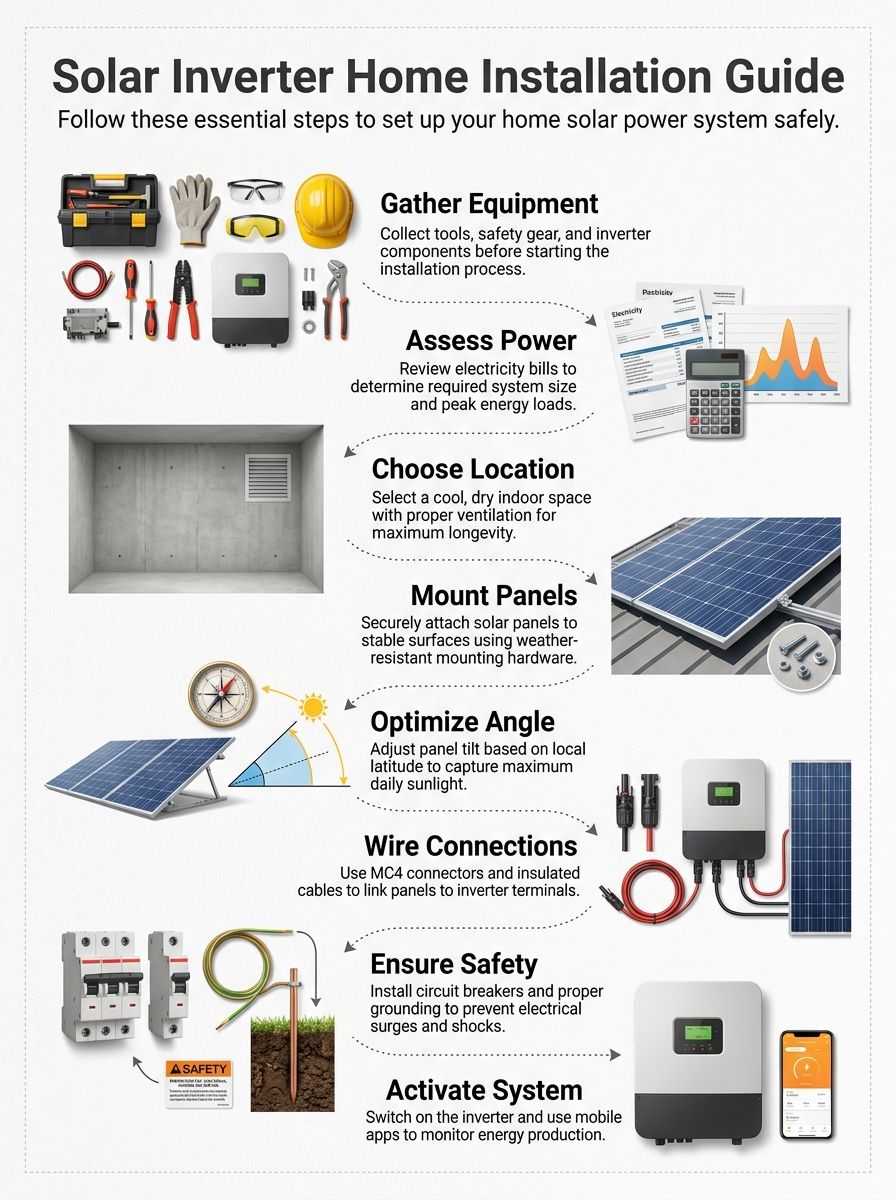
Here is your lesson plan for this guide. First, you will complete a pre-installation checklist covering tools, power sizing, and compliance. Second, you will select the correct location and mount your solar panels. Third, you will establish all electrical connections safely. Finally, you will activate your system and configure performance monitoring so you can track results from day one.
Key Takeaways
- A solar inverter converts DC power from solar panels into AC electricity that powers your home safely and efficiently.
- Most homes in India require between 3 kW and 10 kW systems, depending on appliances, climate, and lifestyle habits.
- Install inverters indoors in cool, dry, shaded locations with proper ventilation to prevent overheating, moisture damage, and equipment failure.
- Connect solar panels using MC4 connectors with proper grounding, circuit breakers, and surge protection devices on both AC and DC sides.
- Monitor your system weekly using mobile apps or LED indicators to track energy production and catch efficiency problems early.
Checklist Before Installing a Solar Inverter
Before you start your solar inverter installation, gather the right tools and equipment. You will need a multimeter, wire strippers, crimpers, and safety gear including gloves and goggles to protect yourself during the work.
Next, evaluate your home’s power needs. Review your electricity bills and understand your daily energy consumption. Calculate your required system size based on the kilowatt-hours you use each month.
Then decide on your system type. An on-grid system connects to the electricity grid. An off-grid system relies on battery storage for independence. A hybrid inverter combines both, giving you flexibility for nighttime use and power outages.
According to the 2026 guidelines for the PM Surya Ghar: Muft Bijli Yojana, homeowners who install systems of 3 kW or more are eligible for a maximum direct subsidy of ₹78,000. Choosing the right system size from the start links your technical decisions directly to this financial reward.
Review your roof space, structural capacity, and local building codes. Check whether your electrical panel has room for new breakers and AFCI protection devices.
Contact a NABCEP-certified professional or a qualified electrician to verify your setup meets all safety requirements. Document your home’s voltage and amperage before you begin any work.
Essential Tools and Equipment
Installing a solar inverter requires specific tools and equipment. Gathering everything beforehand ensures smooth installation and prevents costly delays.
- Solar inverter unit with Type II Surge Protection Devices on both AC and DC sides for complete surge protection during operation.
- AC and DC cables sized appropriately for your system’s power requirements and compliant with Bureau of Indian Standards (BIS) certifications IS 16221 (Part 2):2015 for electrical safety and IS 16169 for grid-interconnection approval.
- Solar panel array, whether mono PERC solar modules or bifacial solar modules, mounted securely to your roof or ground structure.
- Mounting hardware and brackets that hold your panels at the optimal panel angle for maximum sun exposure throughout the day.
- Circuit breakers and safety disconnects positioned between your panels and the inverter to cut power instantly during emergencies.
- Grounding wire and proper grounding equipment to prevent electrical faults and protect your entire solar panel system from damage.
- MC4 connectors and insulated DC wires that link panels to the inverter’s input terminals without leakage or electrical failures.
- Surge protectors and Type II surge protection devices that shield your equipment from lightning strikes and power surges from the electricity grid.
- Batteries for hybrid or off-grid setups that store energy and provide battery backup when sunlight is not available.
- Basic hand tools including wire strippers, crimpers, multimeters, and screwdrivers for secure electrical connections and component fastening.
Evaluating Your Home’s Power Needs
Determining your home’s power requirements forms the foundation of your entire solar installation. You must measure your energy consumption in kilowatts (kW) to select the right solar power inverter for your situation.
Start by reviewing your electricity bills from the past twelve months. This data shows your average monthly usage and reveals seasonal patterns. Most homes require between 3 kW and 10 kW systems, depending on appliances, climate, and lifestyle habits.
Based on a 2026 residential solar report by Evaska Energy, a 3 kW solar setup typically covers an average Indian home that consumes 250 to 450 units monthly. It also generates estimated annual savings of ₹30,000 to ₹50,000. These figures help you right-size your system with confidence.
The right solar inverter size transforms your investment into years of reliable, efficient power generation.
Your daily energy consumption also determines whether you need a single string inverter, microinverters, or a three phase hybrid solar inverter. Calculate your peak load, which is the maximum power your home draws at any one time. This calculation ensures your inverter handles your electrical demands without strain or inefficiency.
The SolaX X1 Smart inverter, for example, supports 150% DC oversizing and 110% AC overloading. These features make it well-suited for residential setups with smart load management that optimizes energy use throughout the day.
Your home’s location, roof orientation, and shading patterns also affect system sizing. A hybrid inverter with energy storage capabilities lets you store excess power for nighttime use or during grid outages.
Think about future energy needs too. If you plan to add an electric vehicle or expand your home, factor that into your system size now. The SolaX X3 Pro G2 achieves up to 98.5% efficiency with multiple MPPT trackers and provides 24-hour energy management monitoring through SolaX Cloud.
Tools like energy audits and online calculators help you establish accurate baseline measurements. Getting this right prevents the two most common mistakes: oversizing, which wastes money, and undersizing, which leaves you without adequate coverage.
Selecting the Best Location for Your Solar Inverter
Your inverter’s location directly affects your system’s performance and lifespan. You must choose a spot with proper ventilation, shade protection, and easy maintenance access. The key decision is whether to install your hybrid inverter indoors or outdoors, which means weighing weather exposure, temperature control, and weatherproof ratings.
Pros and Cons of Indoor vs. Outdoor Installation
Indoor and outdoor placement each carry unique advantages and disadvantages. These differences affect your inverter’s performance, maintenance requirements, and long-term service life. Review the comparison below before you decide.
| Installation Type | Pros | Cons |
|---|---|---|
| Indoor Installation |
• Creates a cool environment that reduces heat damage • Protects from moisture exposure • Shields the unit from direct sunlight completely • Prevents rain and weather-related deterioration • Offers easy access for maintenance tasks • Reduces fire hazards through controlled conditions • Extends inverter lifespan considerably
|
• Requires dedicated indoor space in your home • May need electrical wiring upgrades • Installation labor costs can run higher • Requires proper ventilation systems nearby • Takes up garage or utility room space • May need additional cooling measures installed
|
| Outdoor Installation |
• Saves interior home space entirely • Reduces installation complexity in some cases • Keeps electrical components outside your living area • Simplifies cable routing from roof panels
|
• Exposes the inverter to direct sunlight constantly • Rain and monsoon moisture create long-term damage risks • Requires minimum IP65 or IP66 weatherproof rating • Demands additional mounting hardware investments • Summer heat above 45°C harms performance metrics • Increases failure rates without proper shielding
|
Indoor placement is the superior choice for most homeowners seeking reliability and a long service life. A cool, dry, and shaded environment protects your inverter from the conditions that cause premature failure.
Temperature control matters because heat reduces efficiency and damages internal components faster. Moisture creates corrosion that attacks circuits and connections over time.
Outdoor installation demands far more preparation. According to solar engineering best practices for the Indian climate, outdoor inverters must carry a minimum IP65 or IP66 weatherproof rating. This is essential for surviving summer heat waves that exceed 45°C and the heavy moisture of monsoon season.
Select indoor placement in a garage, utility room, or basement whenever possible. These environments keep conditions stable and make servicing much easier. Weatherproofing becomes necessary only if outdoor placement is your only practical option.
Considerations for Ventilation and Avoiding Shade
Proper ventilation is a cornerstone of a successful solar inverter installation. Your inverter generates heat during operation, and consistent airflow prevents overheating that damages equipment and reduces system efficiency.
Install your inverter in a location with steady air circulation. Maintain clear spacing around the unit for servicing access. Well-ventilated areas prevent dust buildup, which compromises cooling and shortens equipment life.
Avoid placing your inverter in enclosed spaces or tight corners where air cannot flow freely. Direct sunlight accelerates degradation of internal components. Position your unit away from windows or exterior walls that receive intense rays during the afternoon.
Hybrid inverters and smart inverters with MPPT technology require especially careful placement. Their advanced electronics generate additional thermal output during operation. Adequate ventilation reduces strain on cooling systems and supports safe, efficient performance.
Direct sunlight hitting your inverter can also cause internal temperatures to spike, potentially triggering automatic shutdowns that interrupt power generation. Position your inverter on the shaded side of your home, under eaves, or in covered areas that receive minimal direct rays throughout the day.
Water exposure poses serious risks to electrical components. Keep your inverter away from areas prone to moisture, leaks, or splashing. Mount it at an accessible height to enable easy monitoring and routine maintenance.
Frelit Energy and NewPro solar inverter models specifically benefit from shaded installation locations that maintain optimal operating temperatures. Keeping the area around your inverter clean improves cooling performance and extends equipment life significantly.
The best solar installation is one that works quietly in the background, year after year, without demanding constant attention or repairs.
Securing and Setting Up Solar Panels
Your solar panels need proper support to work well. Mounting systems hold them steady and protect them from wind and weather damage. You must also angle your panels correctly to capture maximum sunlight throughout the day, which directly boosts your DC power generation and improves system performance.
Installing Mounts Correctly
Proper mounting forms the foundation of your solar system’s performance and longevity. Secure your panels to a flat, stable surface using a compatible mounting kit with all fasteners properly tightened to withstand harsh weather conditions.
- Select a mounting kit that matches your panel size and design specifications exactly.
- Inspect the surface where you plan to install mounts, confirming it can support the total weight of your panels and electrical wiring components.
- Gather all fasteners, brackets, and hardware from your mounting kit before starting the installation process.
- Position mounts according to manufacturer guidelines to prevent panel movement or detachment during operation.
- Tighten every bolt, screw, and fastener securely. Loose hardware is one of the most common installation errors and directly compromises safety.
- Verify that mounting hardware meets all manufacturer specifications for your specific panel model and DC power system configuration.
- Space mounts to allow easy access for cleaning and maintenance of your solar panels throughout the year.
- Avoid placing mounts in areas where shade from surrounding objects will block sunlight during peak hours.
- Test mount stability by applying firm hand pressure. They should not shift or flex under this test.
- Document all fastener locations and tightness levels for future reference and maintenance checks on your grid connection system.
Determining the Optimal Panel Angle
Your geographic location determines the ideal angle for your solar panels. This angle directly impacts your energy generation efficiency throughout the year.
India’s diverse climate zones require different panel angles. According to Ministry of New and Renewable Energy (MNRE) best practices, your fixed tilt angle should face true south and match your local latitude. For example, New Delhi requires roughly 28° while Chennai requires approximately 13°. Using your exact latitude as your tilt target maximizes your annual energy yield.
Panels installed at an incorrect angle produce less energy, which cuts directly into your return on investment. Consulting manufacturer instructions or using solar design software helps you calculate the precise angle for your specific location.
Adjusting panel angles seasonally can improve performance further. Many homeowners find that a fixed, latitude-based angle works well for year-round operation. Your X3 Forth Plus inverter and power optimizers work most effectively when panels receive consistent, maximum sunlight at the correct angle.
Post-installation angle adjustments are simple to make if you notice your system underperforming. This investment in precision positioning delivers real improvements in AC power generation from your DIY solar installation.
Establishing Connections for Your Solar Setup
Proper electrical wiring connects your solar panels to the inverter and transforms DC power into AC electricity that powers your home. You must follow safety protocols and grounding techniques to protect your system, your equipment, and your family from electrical hazards.
Linking Panels to the Inverter
Connecting your solar panels to the inverter requires careful attention to wiring configuration and safety protocols. Follow the manufacturer’s instructions to ensure your system operates at peak efficiency and protects your home from electrical hazards.
- Check your inverter’s voltage input specifications before starting any connections. Match the wiring configuration to these requirements, whether you arrange panels in series or parallel based on your specific system needs.
- Run DC wires from your panel array to the inverter’s input terminals using MC4 connectors. These connectors provide secure, weatherproof connections that prevent leakage and electrical faults.
- Ensure all cables receive proper insulation throughout the entire installation. Exposed wires create serious safety risks and can damage your solar equipment.
- Connect the positive wire first, then the negative wire to avoid accidental short circuits. Correct polarity is essential before you activate your system.
- Tighten every connection firmly at both the panels and inverter terminals. Loose connections generate heat, reduce efficiency, and create fire hazards.
- Ground your entire system according to local electrical codes and manufacturer guidelines. Proper earthing protects your home and family from electrical shock.
- Secure all cables with fasteners or conduit to keep them organized and protected. Exposed wiring deteriorates faster and poses tripping hazards.
- Verify that your solar panels and inverter are compatible before making final connections. Using incompatible equipment causes system failures and voids warranties.
- Install the inverter’s AC output to your main power distribution board using circuit breakers. This connection ensures your home receives clean, regulated electricity from your solar setup.
- Test all connections with a multimeter to confirm voltage levels match your inverter’s specifications. Accurate readings confirm your system is ready for activation and monitoring through wi-fi enabled features available from shop.waaree and similar retailers.
Safety Protocols and Grounding Techniques
Turn off your main power supply before you start any installation work on your solar system. Put on safety gear, including gloves and goggles, to protect yourself from electrical hazards.
Install circuit breakers and safety disconnects on both the AC and DC sides of your inverter. These controls manage power flow and prevent dangerous situations during and after installation.
Proper grounding is a strict legal requirement for your solar setup in India. Under Central Electricity Authority (CEA) regulations and IS 3043 guidelines, your installation must use a dual earthing setup. This means one dedicated earth pit for the inverter’s AC side and a separate earth pit for the solar panel frames on the DC side. Each pit must maintain a resistance below 5 ohms. Skipping this step can cause electric shocks, equipment failure, and rejection of your subsidy application by your DISCOM.
Make sure all connections stay properly insulated to prevent electrical fires or equipment damage. The SolaX inverter includes Type II Surge Protection Devices on both AC and DC sides, which guard against power surges that could harm your system.
Cable sizing also matters greatly. Use the correct wire gauges for your system’s power capacity. Many people skip grounding and surge protection steps, which leads to inverter damage and costly repairs.
- Follow your inverter manufacturer’s specific grounding instructions for your exact model.
- Use anti-PID protection features to prevent potential-induced degradation that weakens panel performance over time.
- Install breakers, protective devices, and correctly sized cables on both sides of your system.
- Test all grounding connections with a multimeter before you power on your system.
Follow all safety and testing procedures carefully. This reduces risks like fire hazards, inverter failure, and inspection rejections from your local electricity board.
Activating and Assessing the Solar System
Powering up your solar system for the first time is a major milestone. You will watch it transform sunlight into electricity for your home. Your job at this stage is to monitor the inverter’s display carefully and confirm that everything runs at peak performance.
Conducting the Initial Power-On
Activating your solar system requires careful attention to detail and strict adherence to safety protocols. Work through each step below in order.
- Put on safety gloves and goggles before approaching the inverter or any electrical components.
- Verify all DC and AC switch connections are secure and positioned in the off position before proceeding with activation.
- Check that solar panels are delivering power to the inverter by observing voltage readings on the display screen or monitoring equipment.
- Switch on the inverter and watch for any error messages or indicator lights that signal potential problems with your system.
- Monitor the inverter’s startup sequence carefully to ensure successful synchronization with the grid occurs without interruption.
- Observe the system for a full operational period to confirm stable operation and consistent power delivery from your panels.
- Have a licensed electrician verify that the inverter operates within expected parameters and meets all safety standards for your home.
- Address any issues observed during power-on immediately. Do not proceed with full commissioning if problems appear on the display.
- Document all initial readings and performance metrics for future reference and system maintenance tracking purposes.
- Leave the system running to establish baseline performance data that helps you track efficiency gains over time.
Tracking System Performance and Efficiency
Your solar system requires regular monitoring to maintain peak performance and catch problems early. Modern inverters come with mobile app integration that lets you track energy production in real time through Wi-Fi connectivity.
SolaX Cloud offers real-time performance tracking via an app or web interface. This gives you instant visibility into how much power your system generates each day. Check your system’s performance weekly using the app or LED indicators on your inverter.
This consistent oversight helps you spot efficiency drops before they become serious issues. Apply firmware updates as soon as your manufacturer releases them to keep your inverter running at its best.
- Track daily energy output, voltage levels, and system temperature to understand your installation’s true capabilities.
- Review performance data weekly to identify patterns and catch problems before they grow.
- Use your inverter’s user manual to configure the monitoring app or web interface correctly.
- Plan maintenance and upgrades based on real performance data, not guesswork.
You can also optimize system efficiency by adjusting panel angles based on seasonal changes throughout the year. Staying informed about what your solar panels actually produce gives you the power to maximize your investment. This active approach turns you from a passive system owner into a confident energy manager.
Conclusion
Installing a solar inverter transforms your home into an energy-efficient property that generates clean electricity for years to come. You have worked through every critical stage, from choosing the right location away from direct sunlight to connecting panels safely with proper grounding techniques.
This solar inverter installation process rewards careful, ordered work. It converts DC power into usable AC energy for your entire household. A certified electrician should inspect your completed work to confirm everything meets local building codes and safety standards.
Monitor your system’s performance through your tracking tools, stay current with firmware updates, and enjoy the practical benefits of a solar power system working for your home every day.
FAQs
1. Can I install a solar inverter by myself?
You can install a solar inverter yourself, but you must follow local electrical codes and Bureau of Indian Standards safety requirements. Hiring a licensed electrician is the safer choice for complex wiring tasks.
2. Where should I place my solar inverter at home?
Mount your solar inverter in a cool, shaded spot where temperatures stay below 40°C for optimal performance. A garage wall or utility room away from direct sunlight works best.
3. What tools do I need to install a solar inverter?
You need a drill, mounting screws, a wire stripper rated for at least 10 AWG wire, and a multimeter to complete the job safely.
4. How do I connect the solar inverter to my home power system?
First, link the solar panels to the inverter input terminals, then connect the inverter output to your home circuit breaker. Always shut off the main power supply before starting any wiring work. Double-check all connections show proper voltage readings (230V AC in India) before powering the system on.